
Blog
What is flow measurement, and how is it done in a network?
To manage loss you first need to know how much water is flowing. Flow measurement quantifies the volume passing a main or a zone per unit time; it is the first numerical step of any water-loss programme.
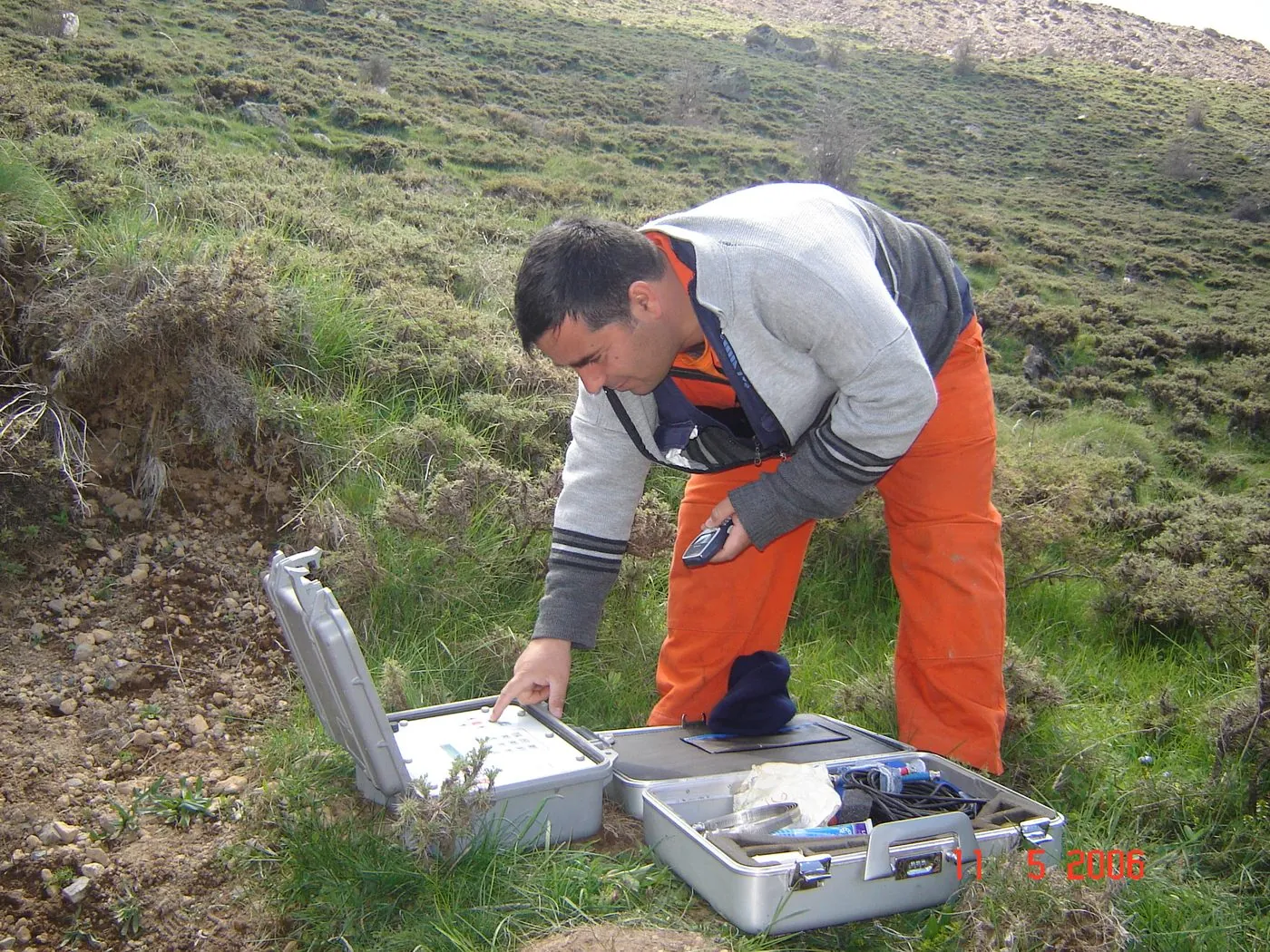
Why measure flow?
Water-loss management cannot reduce a quantity it does not measure. Until the water passing a main or a zone per unit time is measured, the size of the loss is left to guesswork. Flow data quantifies the gap between the water pumped into the reservoir and the water reaching customers, and it forms the basis of the non-revenue water (NRW) rate.
When the inflow of a District Metered Area (DMA) is compared with the sum of legitimate consumption inside it, a continuous, unexplained difference points to physical leakage.
The flow curve recorded through the day also produces the zone's consumption profile: the morning and evening peaks, the midday dip and the still flow of the night. That profile feeds both network planning and leak analysis.
Temporary measurement: the clamp-on ultrasonic flow meter
The most common tool in temporary measurement campaigns is the portable ultrasonic flow meter. The sensors are clamped to the outside of the pipe; there is no contact with the water, the meter is fitted while the main stays under pressure, and no service interruption is needed.
For a correct reading there must be enough straight pipe before and after the sensor — typically ten pipe diameters upstream and five downstream. Mounting close to a bend, a valve or a pump outlet distorts the flow profile and widens the error.
The pipe must be completely full at the measuring section. On a partly filled main, or at a point with an air pocket, an ultrasonic reading is unreliable; this is why choosing the point matters as much as the measurement itself.
Permanent measurement: the zone (DMA) meter
For continuous monitoring a permanent electromagnetic flow meter is installed at the zone inlet. It has no moving parts, its pressure loss is low and it holds its accuracy across a wide flow range; its installation, however, requires the main to be cut.
The meter is connected to a data logger or a telemetry unit; flow is logged in 15-minute steps and read remotely. Each zone's flow is then monitored without interruption: when a new leak forms, the night flow rises within a few days and the system gives early warning. For the logic of zoning, see What is a DMA?
How is the measuring point chosen?
The ideal measuring points are the network's natural constrictions: the outlet of a reservoir or a pumping station, the single feed main into a zone, or a DMA boundary valve. At these points all the water entering the zone passes through one section.
The chosen section must be straight, full and clear of turbulence, and there must be safe access to the sensor and the pipe inside a manhole or valve chamber. The pipe material and the true internal diameter must be known, because the flow calculation rests directly on the cross-sectional area.
Minimum night flow
The lowest flow measured between 03:00 and 05:00, when consumption has almost stopped, is the minimum night flow. Most of this value is not legitimate night use but continuously running physical leakage.
If the minimum night flow rises over time while connection count and population stay constant, the increase is almost always a new physical leak. This makes night flow the earliest and most objective signal in network monitoring. To bring the loss down to individual mains within a zone, a step test is used; for the conceptual framework, see What is a DMA?
What affects accuracy?
In ultrasonic measurement the biggest source of error is a wrongly entered pipe internal diameter and material; the device computes the speed of sound in the pipe from these values. Even a few millimetres of diameter error turns into a deviation of a few per cent in flow.
Air bubbles in the pipe, a partly filled section, poor contact between the sensor and the pipe (dirt, rust, thick paint) and dried coupling gel all weaken the signal. On an electromagnetic meter, low water conductivity, an earthing fault and a degraded internal lining produce reading errors.
For both technologies, periodic calibration and a cross-check against an independent method after installation (a reservoir level-drop test, for example) are recommended.
From measurement to result
The flow records collected are entered into the LeakExpert platform; each zone's minimum night flow, consumption profile and NRW share are assessed together. Zones with heavy loss are prioritised and the field crew is directed to the right zone for acoustic surveying and step testing. Flow measurement is not a one-off task but a monitoring cycle that repeats continuously.
Also on the blog
Related articles.
How to tell if there is a water leak: 8 signs in a network
Signs of a hidden leak in a drinking-water network: rising night flow, pressure drop, a wi…
Pressure management and pressure zones (PMA)
How high and fluctuating pressure drives leaks and bursts, setting up a pressure managed a…
What is acoustic water leak detection, and how is it done?
The steps of acoustic leak detection: survey with noise loggers, narrow down with a ground…
For your network
Let's measure the loss and pinpoint it.
In a short video call we can review the current situation and the method to apply.