
Project · Kırklareli · Municipality of Keşan · Thrace · 2026 · pilot
56.8 km in six nights, 20 leaks.
A pilot application to locate physical water leaks that do not surface on the Keşan drinking-water network by acoustic listening; measurement across 301 street/avenue sections in 7 neighbourhoods.
- Main listened (6 nights)
- 56.8km
- Physical water leaks located
- 20count
- Neighbourhoods surveyed
- 7count
- Leak frequency
- 1 / 2.8km
- Average finds per night
- ~3.3leaks
Findings
Leaks by neighbourhood: Yukarı Zaferiye 11, Aşağı Zaferiye 4, İspat Cami 3, Cumhuriyet 1, Büyük Cami 1. They concentrate mainly on old / weak infrastructure mains and at service connection points; the problem is structural.
Finding no leaks on the nights of 1 Aug and 3 Aug shows those areas are relatively healthy and that resources can be directed to the real problem zones.
Financial impact (with assumptions)
If these 20 leaks alone are not repaired, at 0.45–1.00 m³/h per leak and 8,760 h/yr the annual loss is ≈ 79,000–175,000 m³. At a cost of ₺12/m³ and a tariff value of ₺30/m³, that is millions of ₺ a year. Exact values are clarified by a DMA minimum night flow measurement.
Recommendation
Most of the town was not surveyed. Applying the measured density to the whole town, hundreds of detectable leaks are expected. The required cycle: detection → repair → verification → reporting.
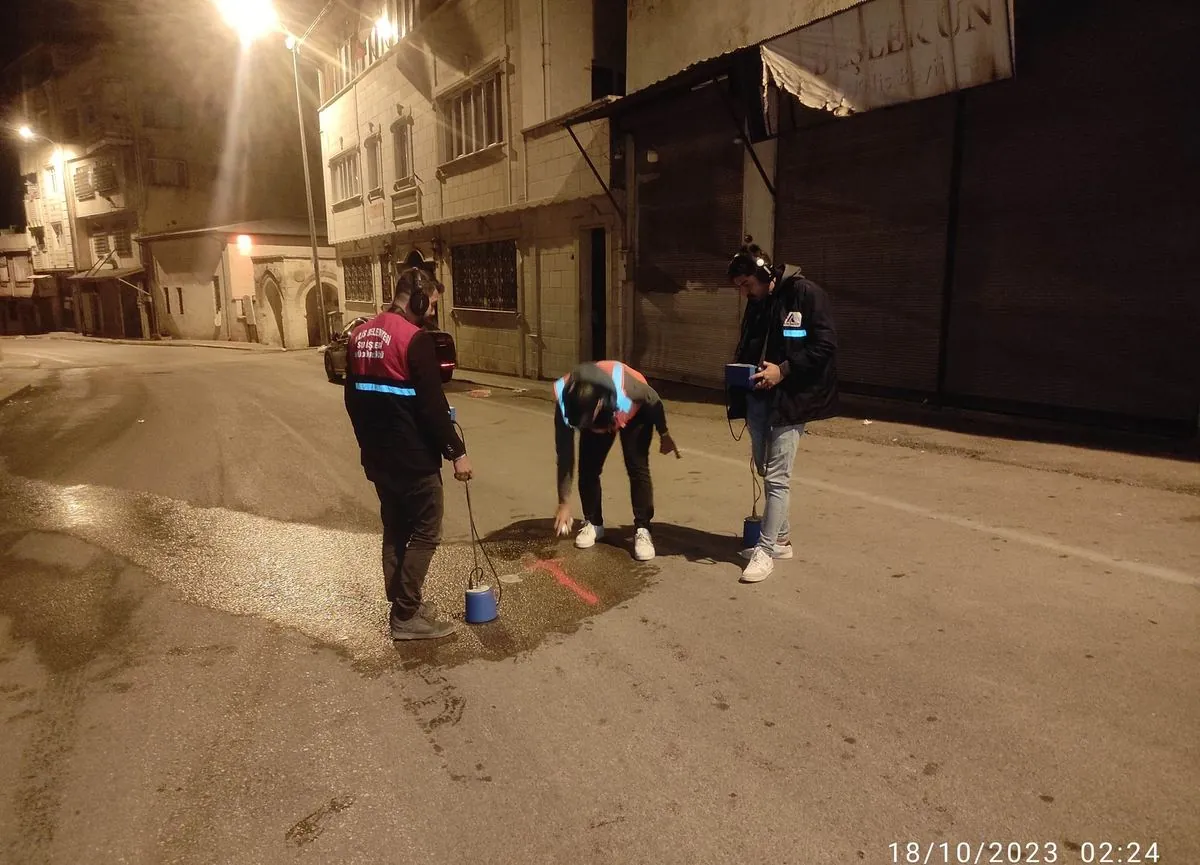 Night acoustic listening (represents the method)
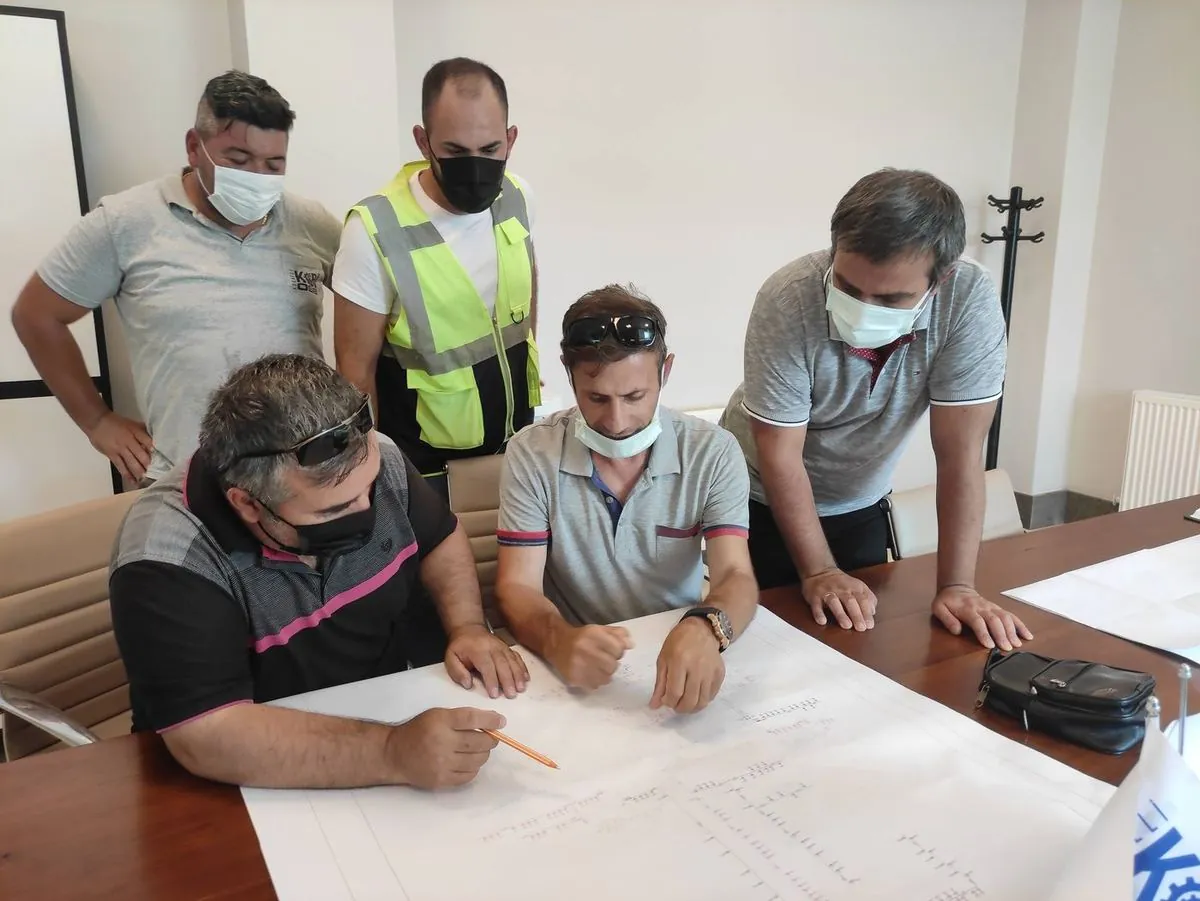 DMA design and measurement plan
Source: the 29 July – 3 August 2026 daily work reports and 20 fault detection reports. Images represent the method.
Result
Leak reduction is a matter of continuity.
New leaks form on the network all the time; without regular surveying the loss rate returns to its old level within 1–2 years. A permanent crew and DMA-based monitoring are needed.
Let's meet remotely
Let's assess your network together.
In a short video call we go over the current situation, the approach and the scope.